
Letter from the Road #11

Updated: Aug 23, 2019
“We will not lie, steal, or cheat, nor tolerate among us anyone who does.” Honor Code, U.S. Air Force Academy
Gerry
I was ready to return home. My car had clocked over 11,000 miles thus far and I hadn’t yet cleared the Rockies on the return leg. I needed a psychological lift to sustain my stamina and interest for the last leg. Fortunately, Denver provided that lift and became the perfect launch pad for the sprint back to New York: Nathan could return to Philadelphia on a direct flight, I would be able to check in on Gerry at the University of Colorado hospital, and Nathan and I could enjoy a few exceptional and eclectic experiences together, putting a nice ribbon around our time together. As well, it was a near straight shot east with easy access to the remaining Presidential Libraries that were a cornerstone of my journey.
So far Nathan and I had managed our time together well. We had not tired of one another despite my persistent advising (meddling) in his education and career options. We had figured out a way to let the other person know when he needed space. We even discussed some ideas for future travel destinations we could do together. On the table is South America over the Christmas holidays and the Scottish Highlands next spring.
Our first stop after leaving Cheyenne, was the US Air Force Academy, located an hour south of Denver In Colorado Springs. Having toured the Naval Academy and West Point, the differences could not be more stark. The Naval Academy is nestled next to a leafy neighborhood in Annapolis. West Point sits on a cliff overlooking the Hudson River. Neither make a particularly strong architectural statement beyond the beauty of the surrounding areas. Their buildings are a hodgepodge of structures built over more than 200 years of existence. Where as the Air Force, in 1954, commissioned Skidmore, Owings and Merrill to provide a complete, integrated and futuristic design for the new academy. The Academy design is a statement for the ages. The 17 spirals that frame the chapel lift your sights to the heavens. It speaks to American optimism and faith. I was interested in Nathan’s impressions. At the outset he was tentative when I first suggested touring the Academy. By the time we had reached the plaza that both surrounds the chapel and overlooks the campus, I now sensed he was in awe of both the dramatic architecture and the bold statement the academy makes about our country. Namely, when America commits itself to setting big goals, we become maniacal, pulling all stops to accomplish or exceed. In other words, we are at our best when we reach for the heavens.

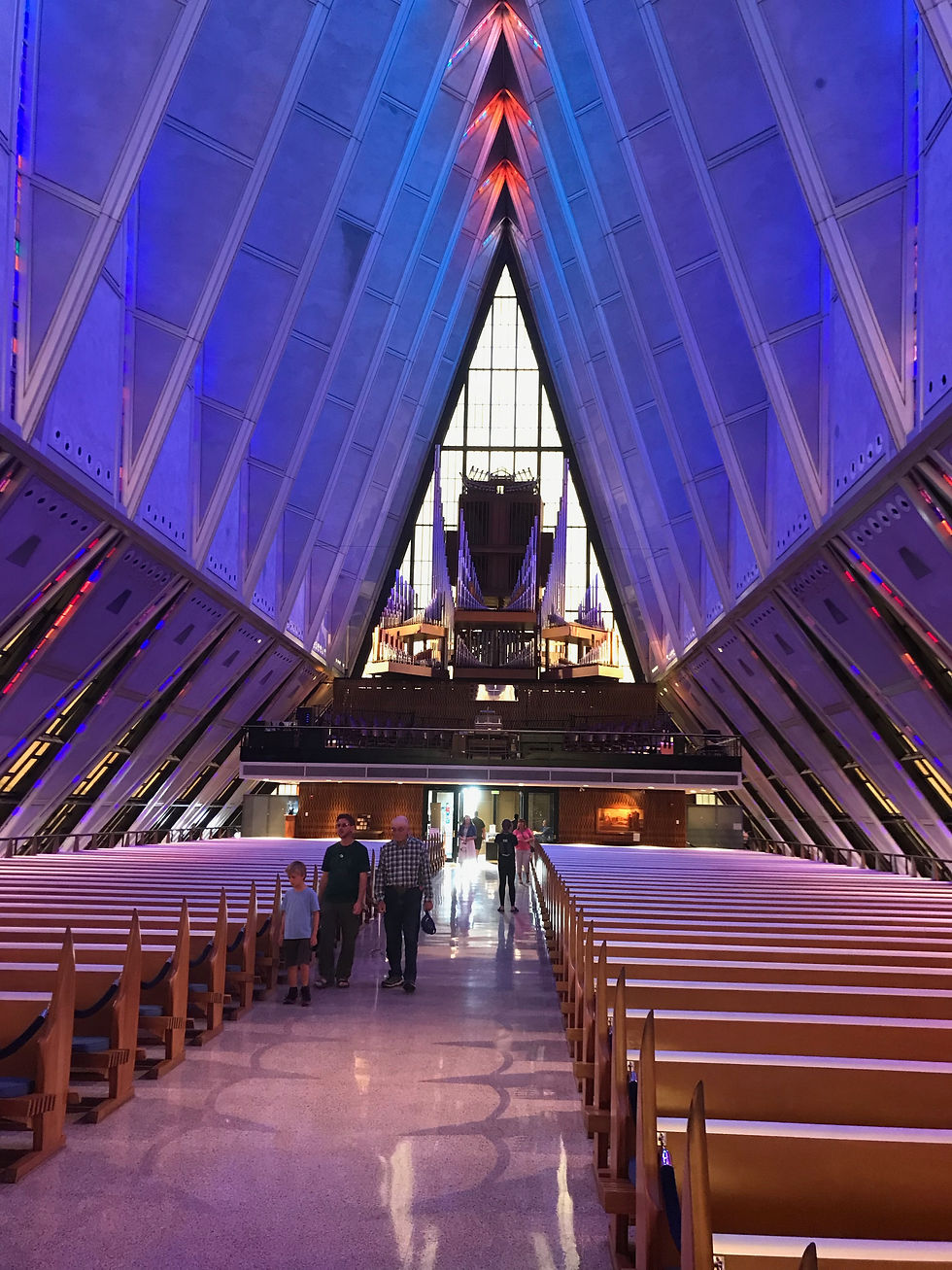
The chapel may be the architectural center piece, but the cultural core is captured in the academy’s honor code that is inscribed on a wall adjacent to the chapel. Through the years there have been a number ethical infractions. The honor code has passed the test of time and rooted out the culprits. With lives and national security at stake, the military must be able to rely on a culture of honesty and trust within its ranks and the chain of command. Can you imagine the challenge posed to our nation's command structure when the President of the United States is a compulsive liar? Starting from the premise, tone is set at the top, I was curious how Nathan viewed this conflict. He was quite succinct with his response. Paraphrasing, “there is a higher authority holding us accountable for being honest and trustworthy.” I was impressed with the integrity of his response. But, I wondered, as we become more secular, what will inspire our spiritual core and ethical bearing when facing moral dilemmas? Fortunately for our cadets, the Academy chapel is there providing a sanctuary that stands purposely apart. The cadets are assured a tranquil place for considering issues of conscience and communicating with a higher authority. We departed the academy in awe of our national leadership that chartered the academy. At one site, they captured so much of what defines us: Our capacity for believing in the power of big goals, education, integrity, community and spirituality.
After the academy, It was time to see Gerry, our reason for coming to Denver. I checked in with his sister Barbara, who I affectionately refer to as General Patton for her dogged advocacy on the part of Gerry. Gerry was delighted by our visit. Clearly he was in good hands and the staff were optimistic. In as much as we were inspired by the Air Force Academy, nothing compares to witnessing inspiring individuals courageously battle difficult challenges. Gerry is one of those individuals. He has endured a sequence of operations that have challenged both his mental and physical stamina. Incredibly, every time he has been knocked down, he has bounced back with renewed strength. And always with good cheer and gratitude. Gerry, we are rooting for you. You have inspired all who know you and love you.
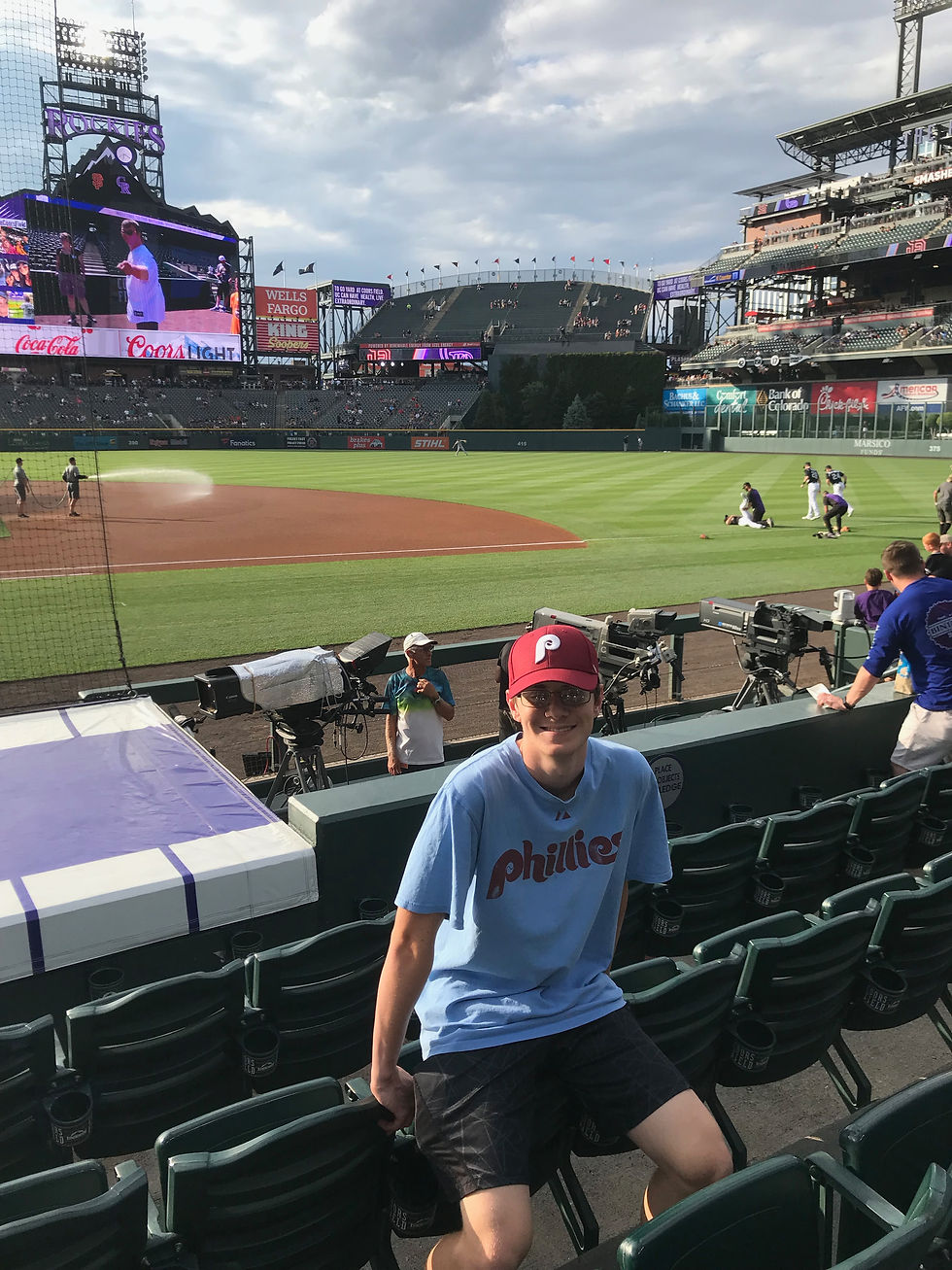
Assured he was in good hands, we could now comfortably enjoy the event highlight of our Denver detour, a baseball game between Denver and San Francisco at Coors Stadium. Nathan has a goal of actually attending a game in every stadium across North America. I believe he had notched 5 stadium visits on his belt, prior to Denver. We secured excellent seats behind the Denver dugout. Yours truly has been to only one other baseball game ever. My parents weren’t baseball aficionados. We didn’t follow a professional team, unlike Nathan and his family’s romance with the Phillies. Therefore I was never exposed to baseball or part of Little League team. It was left to Nathan to teach me the fundamentals. He asked if I knew what was an RBI, for instance. I instinctively thought it had something to do with Rhythm and Blues. Nathan was not amused. This was serious stuff. Amazingly, Nathan had me understanding the game and some of the more important subtleties by the 5th inning, which is when I had had enough learning for a day and returned to the hotel. Interestingly, since attending the game at Coors Stadium, I have watched two games on television. I guess it is never too late.
I’ve been fairly complimentary of Nathan, highlighting many of his fine attributes. I found him to be generous, patient, curious and kind. I was to discover a very different side on our final day together. He revealed to me the devil he truly was. You can imagine my surprise. "Lucifer" persuaded me to have lunch at the Cheesecake Factory, a restaurant chain I had sworn off of for their oversize dishes and waist expanding desserts. Reluctantly, I said I would oblige, but emphatically stressed no dessert for me. When dessert came time to order, having observed the tables around us consume a full spectrum of cheesecakes, I found myself in a weakened position, no longer capable of saying no. I negotiated a compromise with the devil. We agreed I would take one bite leaving the balance for him to eat. The cheese cake arrived and all will power evaporated. I consumed two thirds of it leaving a smidgen for "Lucifer" to scarf up. Between Blizzards and cheesecake, Nathan had found my weakness. It was clearly time for him to go. My trainer will be none too pleased with my waistline. I’ll tell him the devil made me do it.
The Sprint to New York
In a week, I covered the Eisenhower, Hoover and Lincoln Libraries. Disappointedly, the Truman was closed for renovation. I, also, toured the Nelson Atkin Museum in Kansas City and had lunch with a childhood friend in Defiance, Ohio. Abilene, Kansas was my first destination on the sprint home. Expecting to be indifferent to the Kansas plains, I found I liked them immensely. Driving by these large farms, green pastures and endless crop fields with long horizons and open skies reminded me of the giants rural America nurtured, taught basic decencies, and inspired to lead. Bill Clinton, Lyndon Johnson and Richard Nixon, whose libraries I visited earlier, were among these leaders. Though each had their lapses of judgement, their record of achievement was built on community spirit and individual responsibility. These tenets bound small communities together and these leaders understood their importance to a nation. Their predecessors, whose libraries I was about to visit, were products of the same nurturing environment. They were giants whose accomplishments, while not always remembered today, laid the groundwork for our modern institutions and national generosity. They provide the sharpest contrast to a President that is narcissistic, cheap, amoral, and unfit. Truly an unworthy role model not deserving of the title President of the United States. Anybody can destroy something. Creating something lasting and good is harder. The libraries coming up were monuments to unifiers, builders, and freedom fighters. They would find our current leader to be an imposter completely ignorant of our values. A Manchurian candidate.
I'm from Abilene
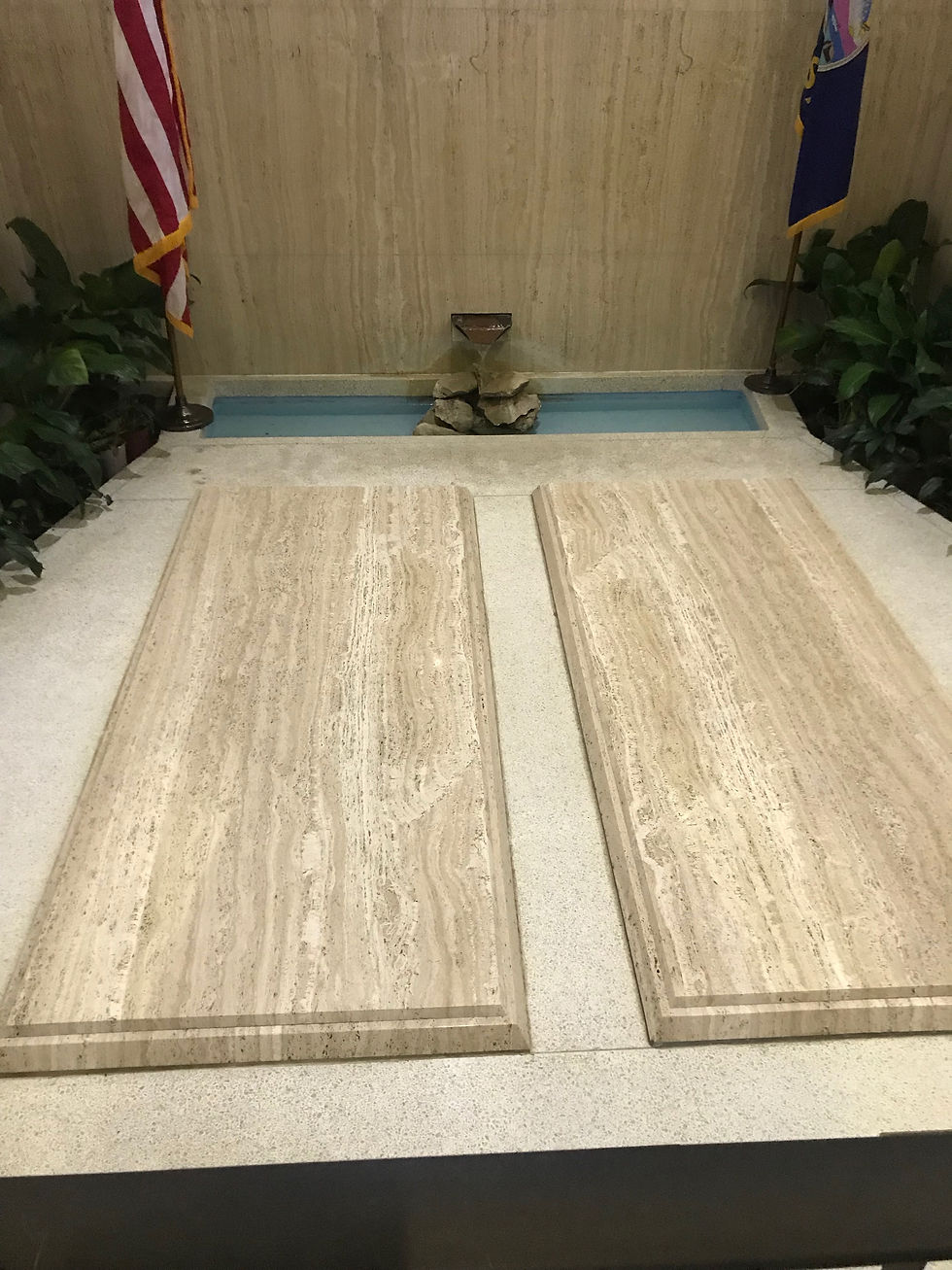
Eisenhower (whom I met as a 7 year old), Truman and Hoover were from humble backgrounds. Each were plain speaking and believed one measure of our greatness was selfless generosity. I have always had a soft spot for Dwight Eisenhower. One of five boys raised in a modest home in Abilene, Kansas, he rose to become the most significant world leader spanning the period from 1942 until 1961. First as Supreme Allied Commander during WWII and ending as President of the United States. He was the first leader of NATO, the important common defense community created during Truman’s Presidency. His library is in the center of Abilene and comprised of four buildings: The museum, research library, meditation chapel/burial site, and boyhood home.
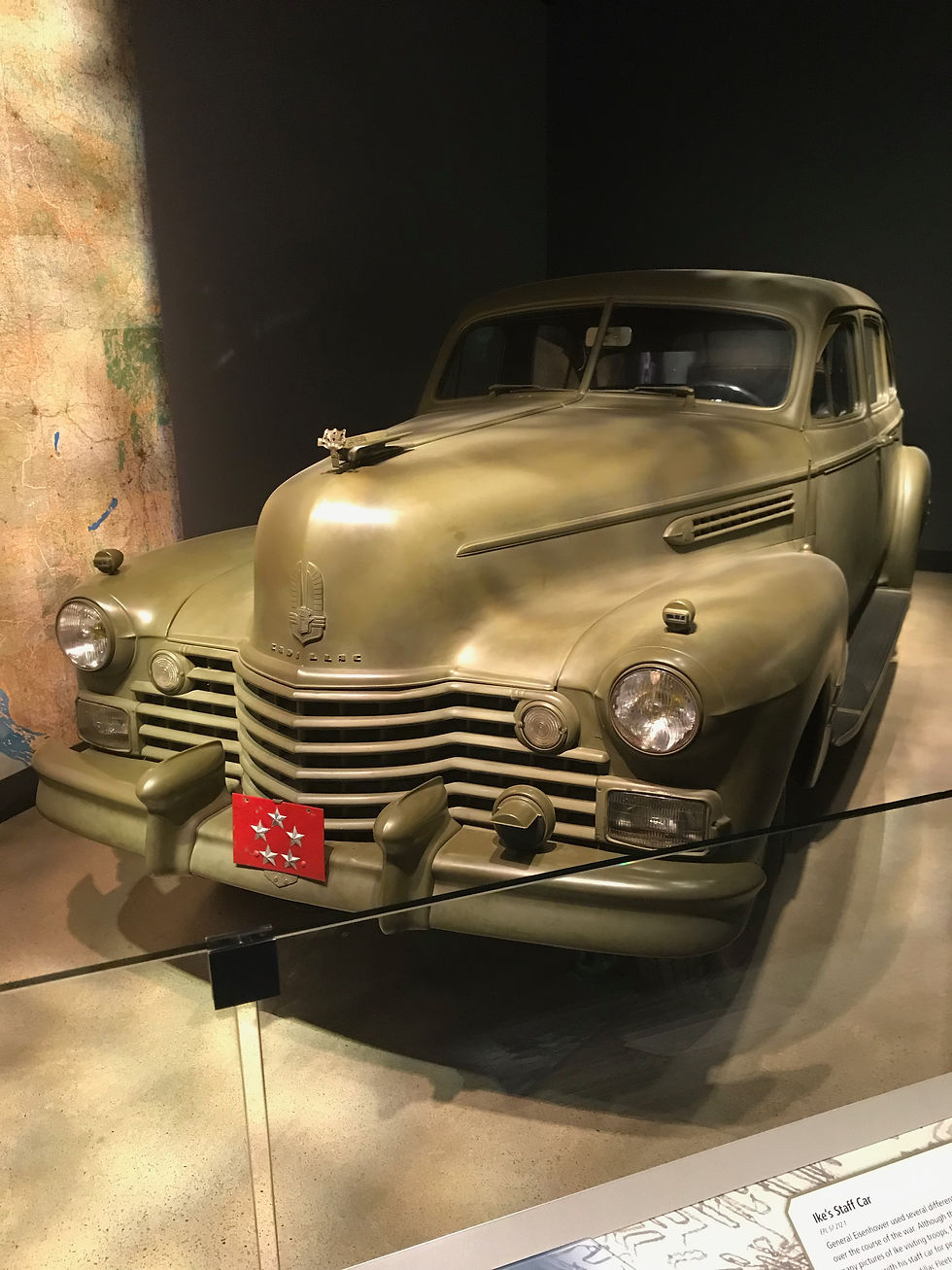
The sandstone buildings are modest in design and furnishings. The family home, much like Bill Clinton’s, is a window into understanding Eisenhower, the man. The family house has been left the exact way it was the day his mother died in 1946. She raised five boys who went on to lead successful lives in their chosen fields. Yet the pictures displayed were not of Eisenhower with FDR or Churchill or images of success achieved by his brothers. Rather the pictures were of their formative years. The years during which his mother and father shaped the Eisenhower brothers into the modest, exemplary men they grew up to be. Strolling through the family home, I imagined Eisenhower’s mother, sitting by the radio, listening to her son deliver his VE Day speech. and wondering what her thoughts were that day? Some how, even Eisenhower’s car that ferried him across London conveyed modesty. His Cadillac Fleetwood, under normal conditions would scream opulence. As Supreme Allied Commander, he needed to travel without attracting attention. One security measure taken was painting every square inch of the Cadillac army/camouflage green including he chrome.
It’s well known that Eisenhower was responsible for our interstate highway system that bound the small communities across the country together. What is less known are the roots of inspiration. First, when Eisenhower was a young colonel, he was given command of a transport caravan that traveled from the east coast to the west coast and taking more than 60 days to complete. Taking an extraordinary amount of time to complete was certainly one data point. The other was provided by Germany. Germany by the beginning of World War II had built a network of autobahns which aided in their prosecution of the war. Eisenhower was impressed by the importance of a national highway network. It is understandable why, with this background, the full name is the Dwight Eisenhower National System of Interstate and Defense Highways.
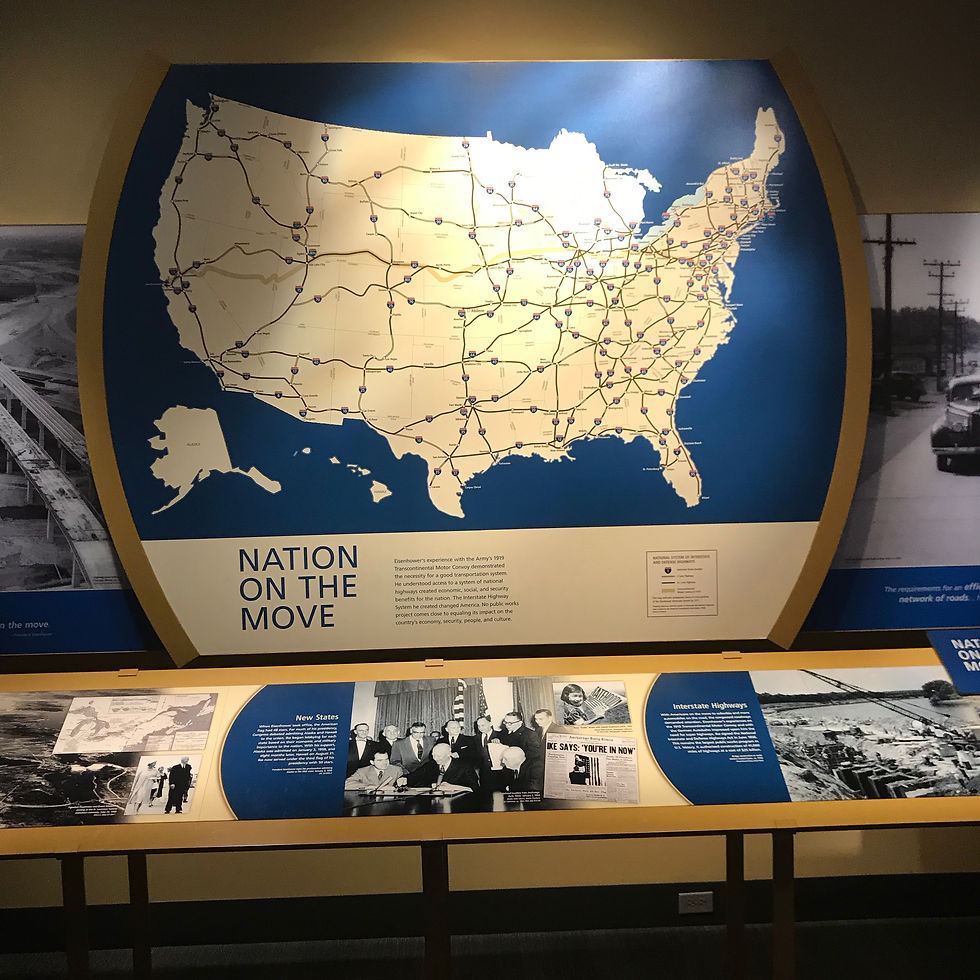
You’ll recall from the inception of this adventure, one of the cornerstones was to learn more about the civil rights movement and understand better where we are today on the road to equality. Eisenhower played a critical role in two important ways. First, the appointment of Governor Earl Warren of California to the Supreme Court as the Chief Justice. Second he enforced desegregating the schools. Without Earl Warren, there may not have been a decision, let alone a unanimous one. Following the ruling, there was deep resentment in the south for the court’s ruling. Arkansas Governor Orval Faubus mobilized the national guard to block black students from entering Little Rock High School. President Eisenhower immediately federalized the state guard enabling the guard to reverse its mission by protecting the entry of black students to the school. These two events spoke volumes. To be one people we had to treat one another equally. Eisenhower understood only the United States government can articulate a national standard and enforce it consistently across the states.
KCMO
With every intention of seeing the Harry Truman Library and home, you can imagine my disappointment that it had just been closed the week before for renovations. I had not been to Kansas City since college. I remembered three things, all products of progressive civic pride. First, Starlight Theatre was still running. The first time I saw Annie Oakley. Unfortunately nothing was scheduled during my stay. Second was the granddaddy of shopping centers, Country Club Plaza. Built in the 1920s, it was the first purpose built shopping center of its kind in America. Fashioned on Spanish/Moroccan design, it remains to this day a collection of stores and restaurants. Finally, the crown jewel of Kansas City is the exquisite Nelson Atkins Museum.

I spent a half of a day at the museum. Always known for its fine collection of Asian antiquities, the Museum has since expanded adding a modern art wing. The overall collection is an excellent representation of art through the ages. You might think of it as a satellite of the Metropolitan Museum of Art in New York City. The original building exterior shares the same greek characteristics and stone of the larger Philadelphia Art Museum. It is comparable in size to the Thyssen Museum in Madrid. The curating and hanging in the modern wing is exceptionally good. The flow of art from one room to the next and within the rooms is sensible. The pictures are not in competition with one another. In other words you can comfortably study and appreciate the picture at hand without feeling distracted by other works of art hanging nearby.
I particularly enjoyed the current exhibit, 30 Americans. It is an exhibit of the best examples of black artists' contribution to interpreting or portraying the black experience in America. There are some very uncomfortable pieces which continue to haunt well after you have left the museum. One such exhibit was comprised of 8 chairs, each with a Ku Klux Klan cap on each chair. Hanging above each chair was a hangman’s noose. Viewers were invited to write a comment and post it on a board. Messages were then digitized and available on line. I accepted the invitation and thinking it would be a breeze providing a comment. It wasn’t. I struggled to find the words that would deliver a powerful message. I wanted to convey an understanding of how blacks would experience this exhibit. I realized all I could do was not overthink it. Consequently, I had clarity and delivered my thoughts from a continuous stream of conscienceless, scribbling down the words as they entered my mind. Raw and real.
The Great Humanitarian
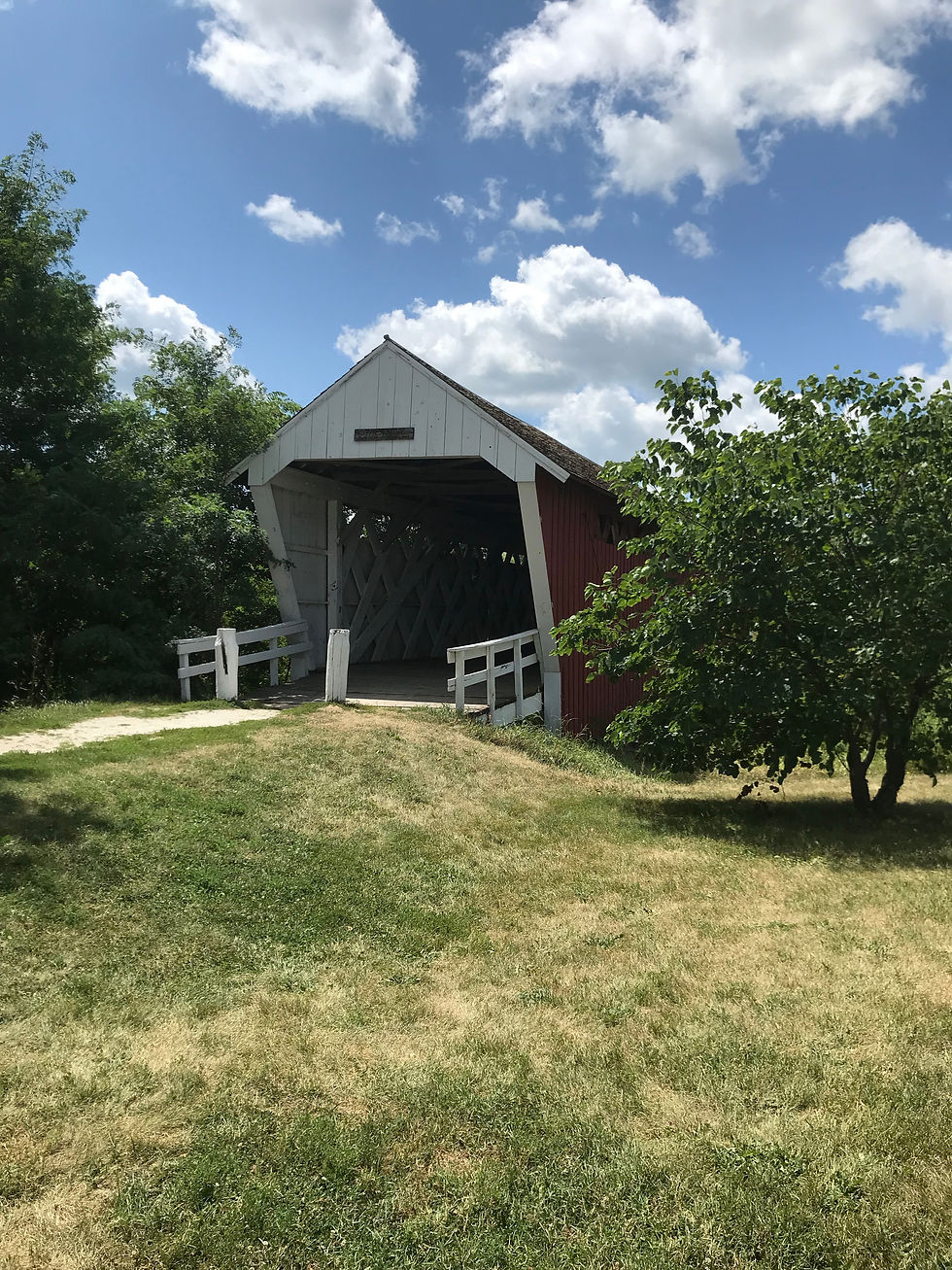
Driving from Kansas City to Iowa, I passed through Madison County, Iowa. I thought of Clint Eastwood and Meryl Streep and the covered bridges that dot the county. The Hoover Library is in West Branch, Iowa. A short distance from Iowa City. It was the smallest library I visited and surprisingly revealing of a President that gets little attention. Herbert Hoover was as iconic American figure as you would ever have hoped to find. Born in a two room house in West Branch, Iowa. Orphaned at 10. Youngest of his era to attend Stanford University. Immensely rich by 30 from mining. A humble, self reliant Quaker who would come to be known as “The Great Humanitarian.” Prior to becoming president, he was Secretary of Commerce. He introduced standardization and air wave regulation. Hoover saw the importance of standardization for driving economic efficiency. Hoover also carried the bulk of the criticism for his response to the Great Depression. He believed fiercely in the role of private citizens and organizations to carry the bulk of the responsibility for humanitarian services and economic revival. His response did not include a robust role for government. FDR understood the role for both the private sector and government in rejuvenating the American economy and providing a safety net for all.
When FDR beat Hoover in the 1932 election, Hoover’s humanitarian work was soon forgotten and he went into isolation. He would not reemerge until after FDR’s death and Harry Truman invited him to lead the U.S. humanitarian efforts in rebuilding Europe. UNICEF, the childhood aid agency was the result of Hoover’s enterprise. The final 24 years of his life he lived in the Waldorf Astoria on Park Avenue. Often he took long walks around the city and became a familiar sight to many. On one of his walks, he ventured into a rough neighborhood. A burglar spotted him, aborted his robbery and approached the former president. He admonished President Hoover saying he shouldn’t be walking alone here and then escorted him back to the Waldorf.
We Can Do Better
The last presidential museum stop on this leg was Abraham Lincoln’s in Springfield, Illinois. I cannot begin to tell you how disappointing the experience turned out to be. Few authentic relics, copies of historic documents displayed as wall paper and wax like figurines portraying different periods and events of Lincoln’s life were the central components of the museum. It was divided into two sections, pre-White House and White House. The entrances to the two sections were cheesy reproductions of the facade of a log cabin and the White House. I knew I was in for a disappointment when one of the greeters asked if I wanted to feel the texture of the skin of the figurines. The introductory film spoke nothing to his challenges and accomplishments as a boy, young adult or as President. It was gimmicky, utilizing a ghost as a storyteller. This museum does an injustice to the legacy of our greatest President. They would have been far better off showing the critically acclaimed movie Lincoln staring Daniel Day Lewis.
The museum and Library are run by an Illinois state agency. The museum was staffed with what certainly seemed like patronage employees exhibiting the all the hallmarks of political appointees. Simply put, they were uninformed and ill qualified. The federally supported libraries cover 13 presidents beginning with Hoover. Frankly, all our president’s museums should be administered by the National Records and Archives Administration. This is our history and we are not doing it justice.

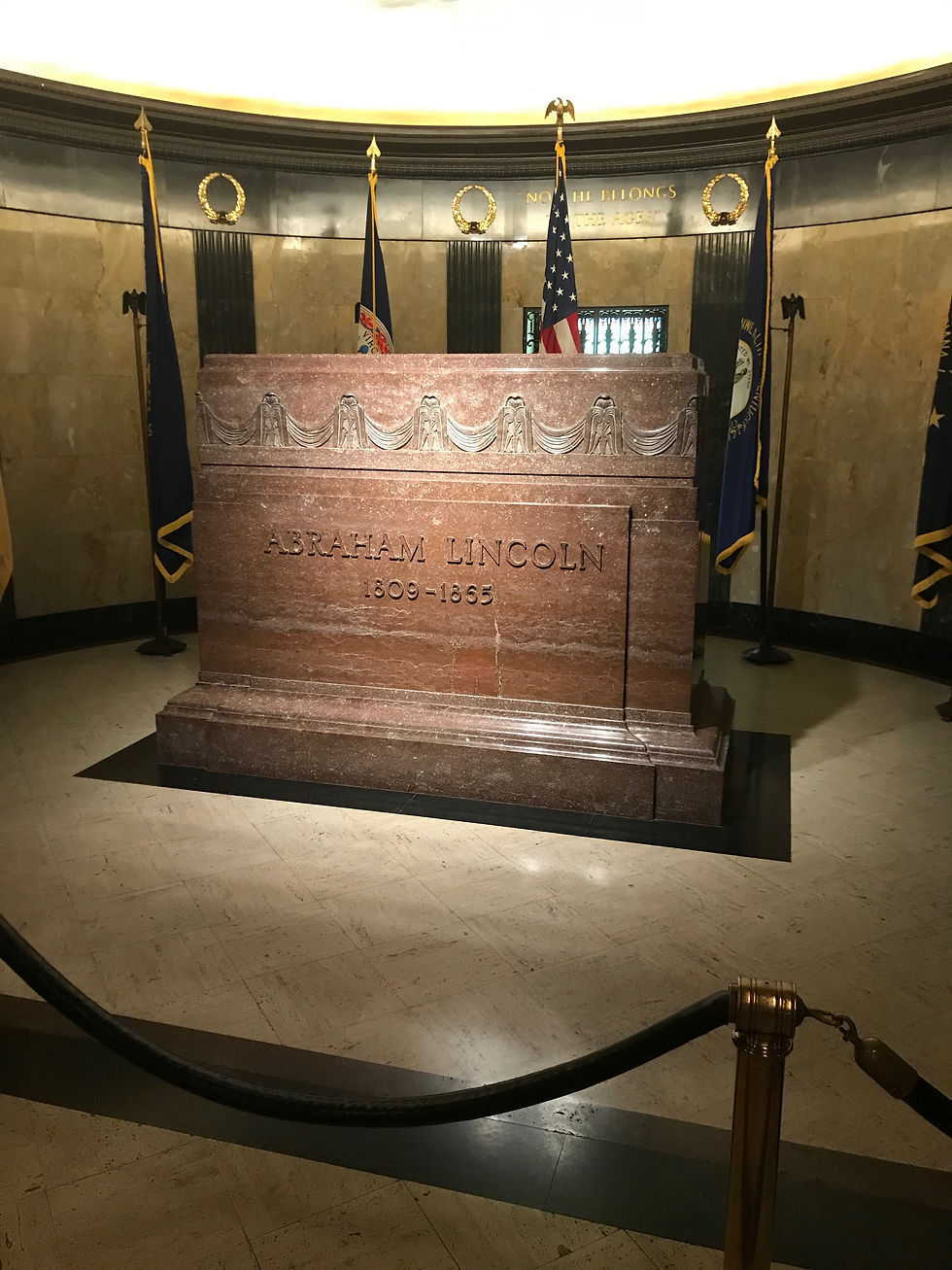
Springfield, like many state capitals is nondescript saving for the capitol building. The city is a mishmash of architectural styles. The Illinois governor’s mansion is designed in the federalist tradition and completely out of sync with its surroundings. As you might expect for a state historically plagued with corruption, It is the largest governors mansion in the nation. My last stop in Springfield was the Lincoln gravesite that is part of a municipal cemetery. I did find It to be both dignified and appropriate as a resting place for our greatest President.
Not So Crazy
You may recall form the blog entry associated with El Paso. In it, I argued the wall as constructed today projects an image that is contrary to our values. At the time I argued for some brainstorming on ideas that could be employed to change the perception. I received a few comments, mostly negative. To the naysayers, it is possible. Please follow the link:
https://twitter.com/bbcworldservice/status/1156519252125540358?s=20
Next
Lunch with my longest friend and the Carter Library


Comments